

Create WhatsApp Authentication Template
You can create WhatsApp authentication templates to be used within your Kaleyra WhatsApp API v2 enabled WABA from the Kaleyra platform other than through API. For more information, see WhatsApp Template API V2. You can use these authentication templates to send the OTP messages to your end-users. After successfully creating the WhatsApp authentication templates, these templates are sent to Meta’s approval through the Kaleyra platform. Once submitted, you can check its status in the Kaleyra platform. The WhatsApp template statuses can be either PENDING, REJECTED or APPROVED.
Prerequisites
- To set up a WhatsApp account on the Kaleyra platform, see Manual Signup
and Embedded Signup. - An active WhatsApp for Business plan that includes:
- A WhatsApp business number.
- An associated profile with the business number.
- A WhatsApp verified and approved profile.
- A WABA ID onboarded on the Kaleyra platform for WhatsApp.
- The Voice Enabled feature for calling through WhatsApp.
Notes:
- Kaleyra supports Marketing, Utility, and Authentication template categories.
- Authentication has replaced the previous OTP Templates, but the Utility and Marketing Template remains the same.
- For the Authentication category, the Kaleyra platform supports ‘Copy code’ setup only. With this setup, you can send a one-time password or code along with a copy code button to your end-users.
To create a WhatsApp authentication template, perform the following steps:
- Sign in to your Kaleyra platform.
- On the left menu bar, click Templates.
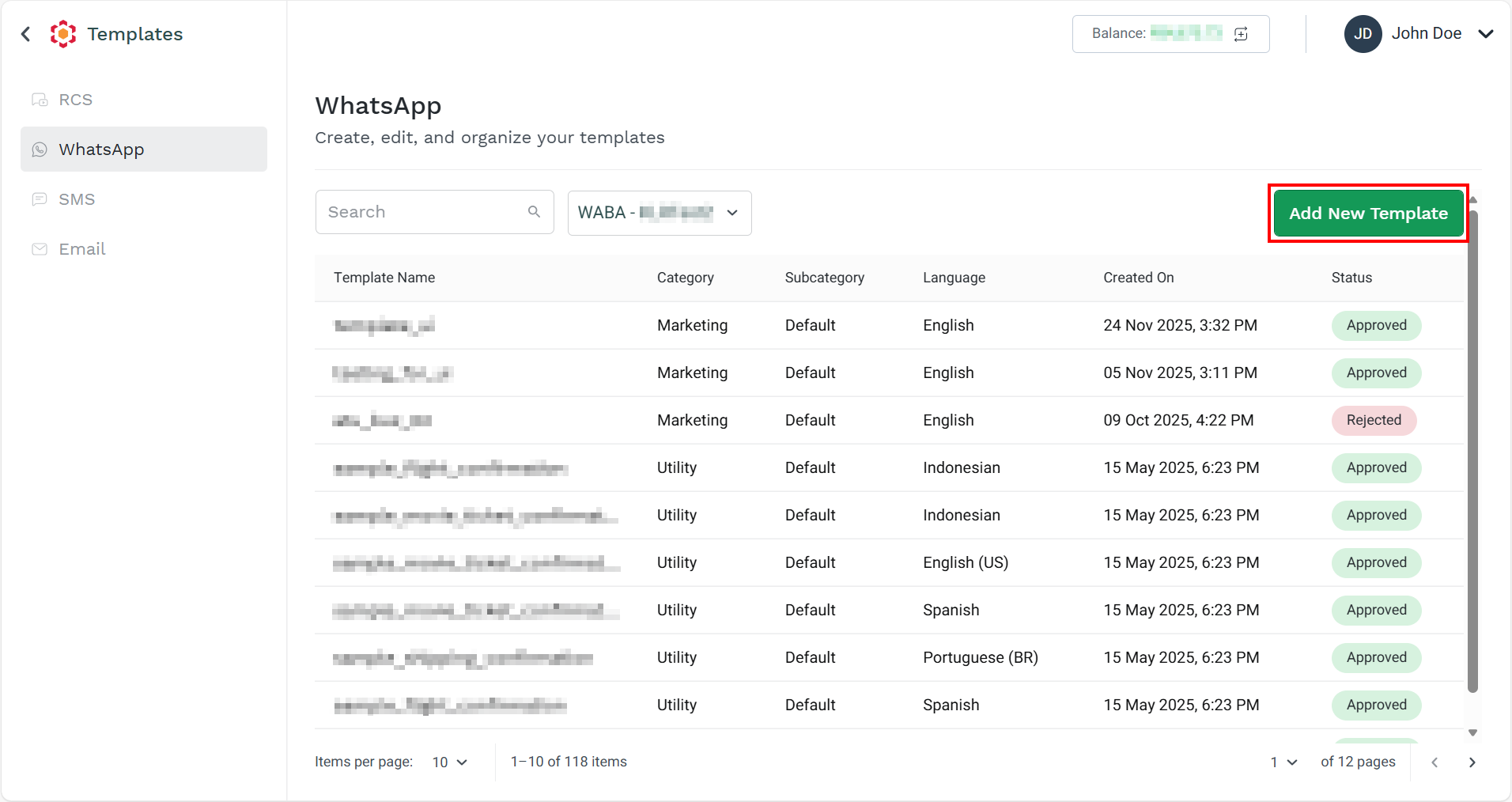
The WhatsApp page appears.
Notes:
- The WhatsApp page contains details such as the template name, category, subcategory, language of the template, creation date, and status of the template.
- The WhatsApp template in the Kaleyra platform supports the following template categories:
- Marketing Template - Intended for awareness, retargeting, sales, promotions, and building customer relationships.
- Authentication Template - To send the OTP messages.
- Utility Template - Intended for opt-in management, order management, account alerts, updates, Feedback surveys, and continuing a conversation.
- You have to follow the following steps to create a template:
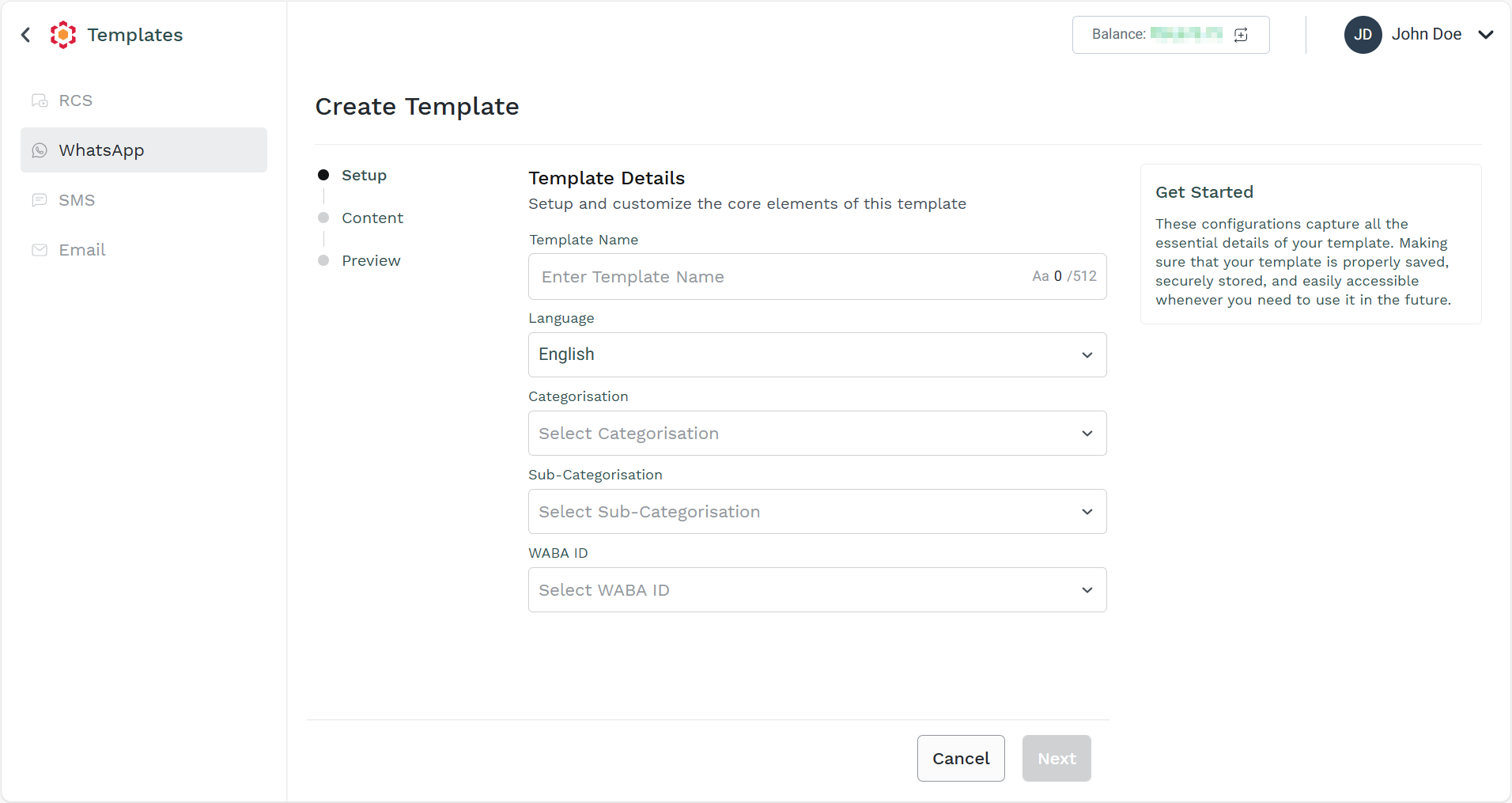
- Setup - Configure template name, language, category, Sub-category, and WABA ID for the template.
- Content - Configure the header, body, and footer of the template.
- Preview - Preview the configured template.
- On the right side of the page, click the Add New Template button.
The Create Template page appears.
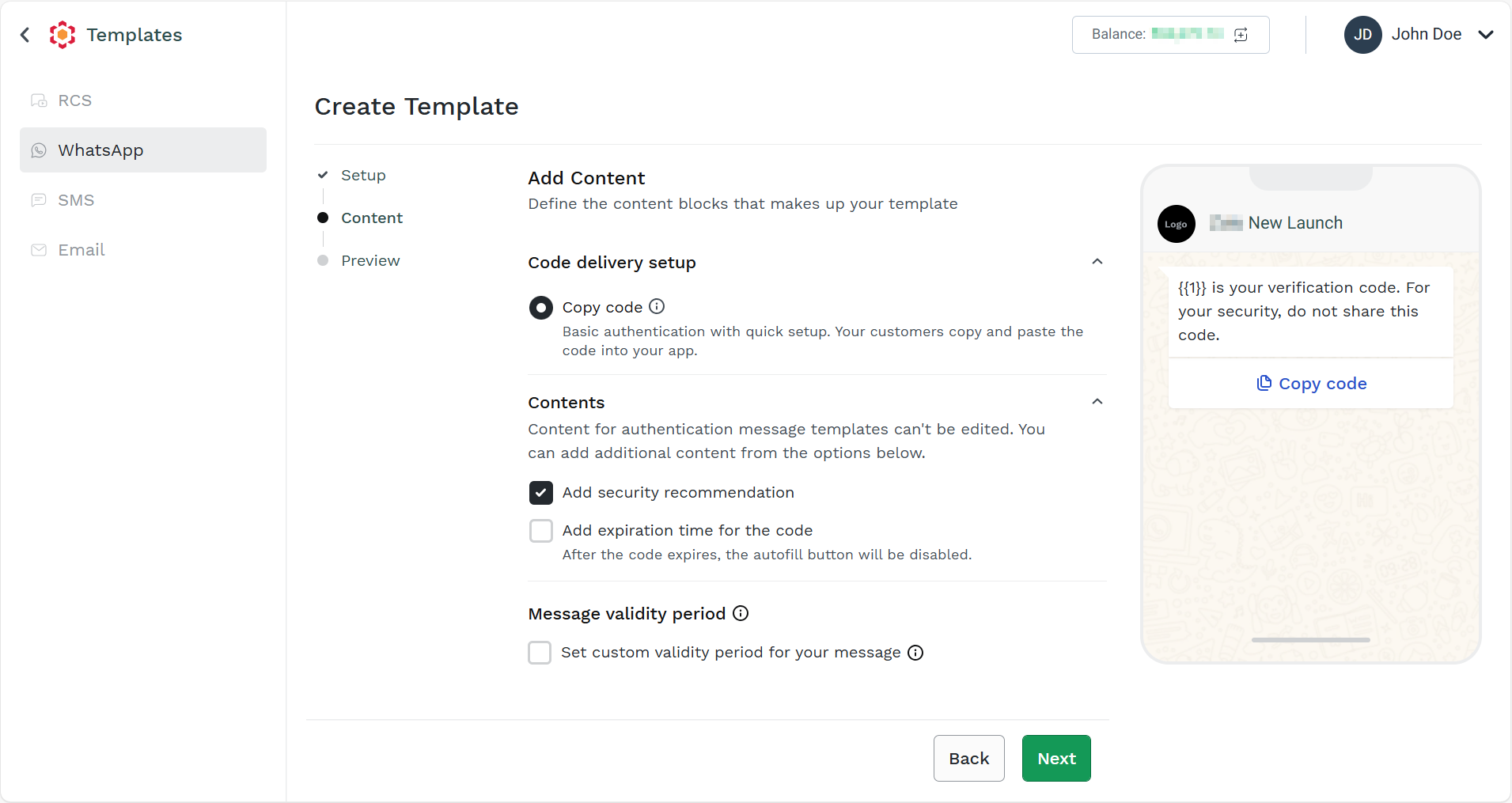
The Content step appears.
Note:
A preview of the message that will be delivered to the end-user based on the current template is displayed.
- In the Content step, perform the following:
- (Default) The Copy code option helps your customers in easy copy and pasting the code. End-users can tap the button in the message to copy the code and then paste it into their app themselves. Copy code works best for customers who request the code on a device that does not have their WhatsApp account.
- (Default) The Add security recommendation helps your customer by adding the security information. If you do not wish to add the information, you can deselect the Add security recommendation check box.
- To add the expiration time for the code, select the Add expiration time for the code check box. After you select the Add expiration time for the code check box, you need to select the time for the expiration of the code. You can select the expiration time from a minimum of 1 minute to a maximum of 90 minutes. When the message is sent using the template and after the code expires, the autofill button will be disabled.
- The default validity period for your message if you do not set is 30 days for Marketing Templates and Utility templates and 10 minutes for Authentication Templates. For authentication templates created before October 23, 2024, default validity is 30 days. To set the validity period of the WhatsApp marketing message before it expires according to the configured timing in case the end-user's WhatsApp account is unreachable, select the Set custom validity period for your message check box. If the message is not delivered within the configured timeframe, you will not be charged, no webhook would be received, and your end-user will not view or get the message.
Notes:
- For marketing templates, a custom TTL will only be applicable if you are MM lite enabled.
- For Marketing Template, custom range is 12 hours to 30 days.
- For Utility Template custom range is 30 seconds to 12 hours.
- For Authentication Templates: the custom range is 30 seconds to 15 minutes.
- Click Next.
The Preview step appears.
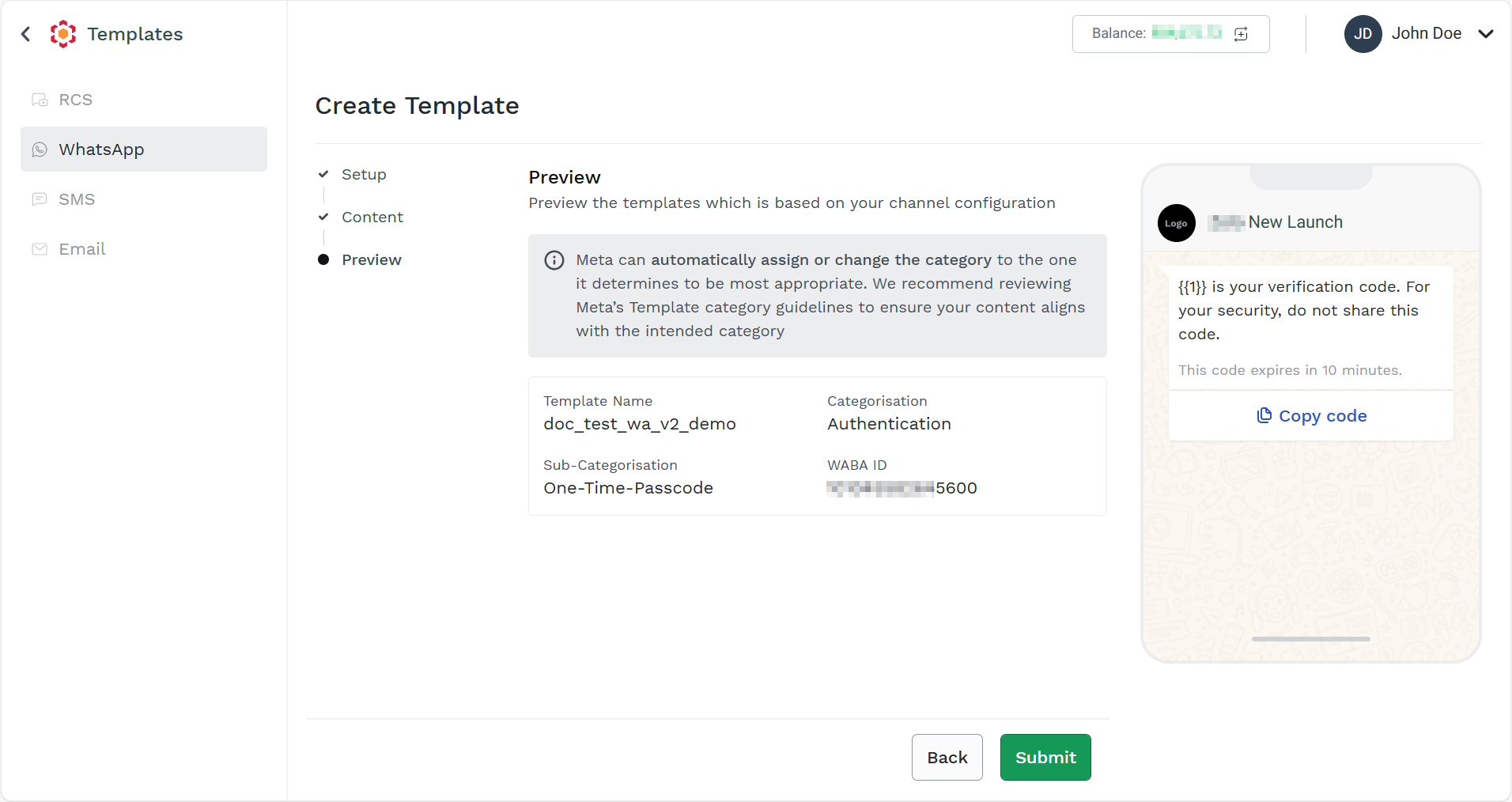
- Preview the WhatsApp template details and click Submit. The authentication template gets created successfully.
Note:
The new template will be in pending status. It gets either approved or rejected after the Meta's review.
Updated about 2 months ago